The first step in building my home was buying an empty cargo van that I could outfit with materials to which I didn’t react, so I would have a safe way to travel to look for property. It took approximately two years to research the type of van I wanted, find a fragrance-free dealer who was willing to discuss chemical sensitivity, wait for the van to be delivered, wait four more months for the chemical smell wafting off the plastic components in the front cabin to finish offgassing, and finally to outfit the van.
When it was time to hire an outfitter I did not choose a company that specializes in converting Sprinters into RVs. There is an entire industry devoted to designing and installing prefab camper components, but most of those components are made of materials to which I react. In addition, I wanted my van to be more flexible, so I could use it in different ways at different times: first traveling to look for property; then moving me and my animal companions to our new home; next hauling materials during construction; moving boxes in and out of storage; and, finally, camping and taking road trips after I was settled in my new home.
Instead of an RV outfitter, I worked with a company that designs one-of-a-kind installations for small businesses. For example, they designed a Sprinter that included a bath area for a mobile pet groomer. They outfitted another Sprinter with four beds, a video gaming system, and a musical instrument storage compartment for a small touring band. When I presented them with my design, they were willing to fabricate it.
My van does not look like an obvious camper because I want to be able to stealth camp on city streets, passing as a utility van, when I am traveling and need a place to stop overnight. There is no ladder to a roof rack, and no shoreline or water connection. I sometimes leave a clipboard and rolled up architect’s plans on the dash overnight to encourage the impression that it is a work van.
I don’t plan to live in my van long term, so I don’t really need the shoreline and water connections that RVs have. I carry water in a rack of four three-gallon jugs (with plumber’s tape around the necks to prevent leaks). My toilet consists of a coco coir tub for bowel movements and an old Starbucks spill-proof mug for urine. I use a bowl for a quick wash, until I can use a campground shower. The van’s inverter provides all the power I need to use an electric tea kettle, Instapot, space heater, and phone/laptop charger. Yeti ice chests chilled with frozen meals I have prepared in advance make more sense than a refrigerator that runs full-time.
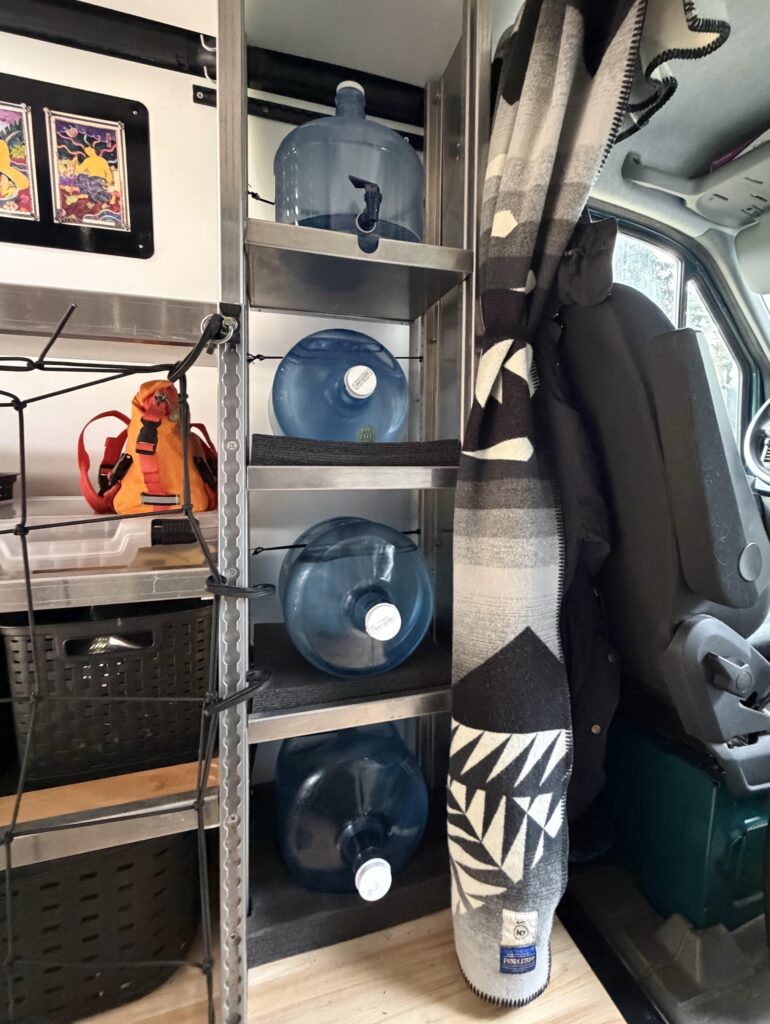
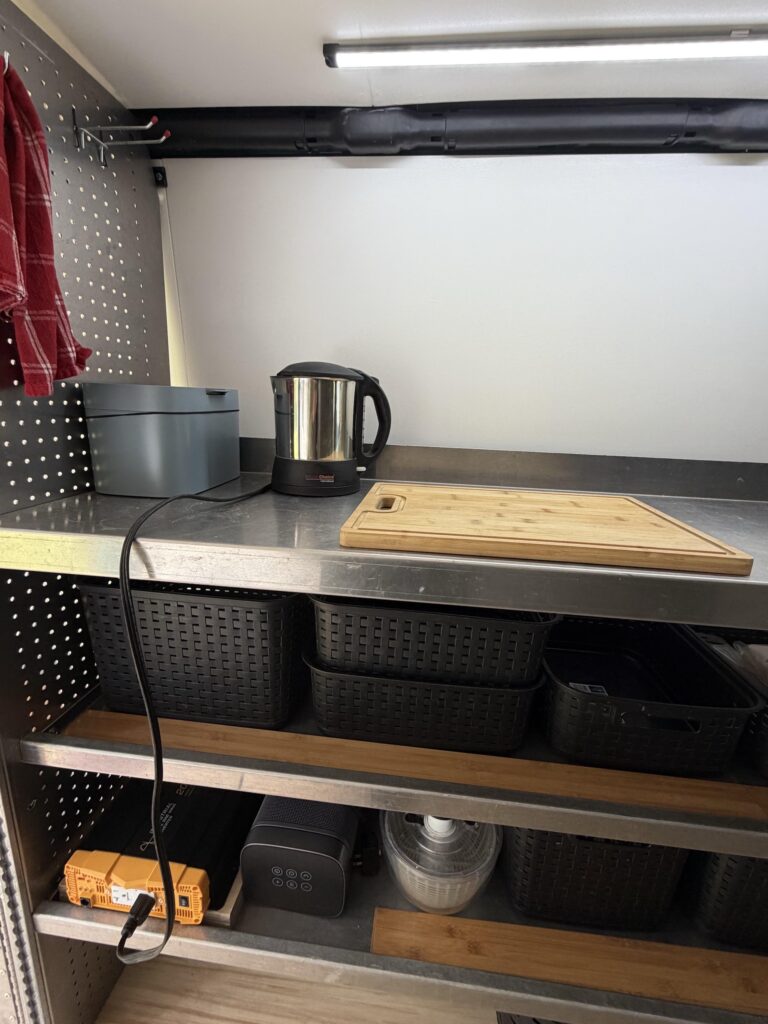
Instead of wooden cabinets I have plastic baskets that serve as drawers and can be arranged in different configurations, as needed. The shelves are adjustable. When the van is in motion, everything is held in place with cargo netting, which pulls aside as a curtain when the van is stationary.
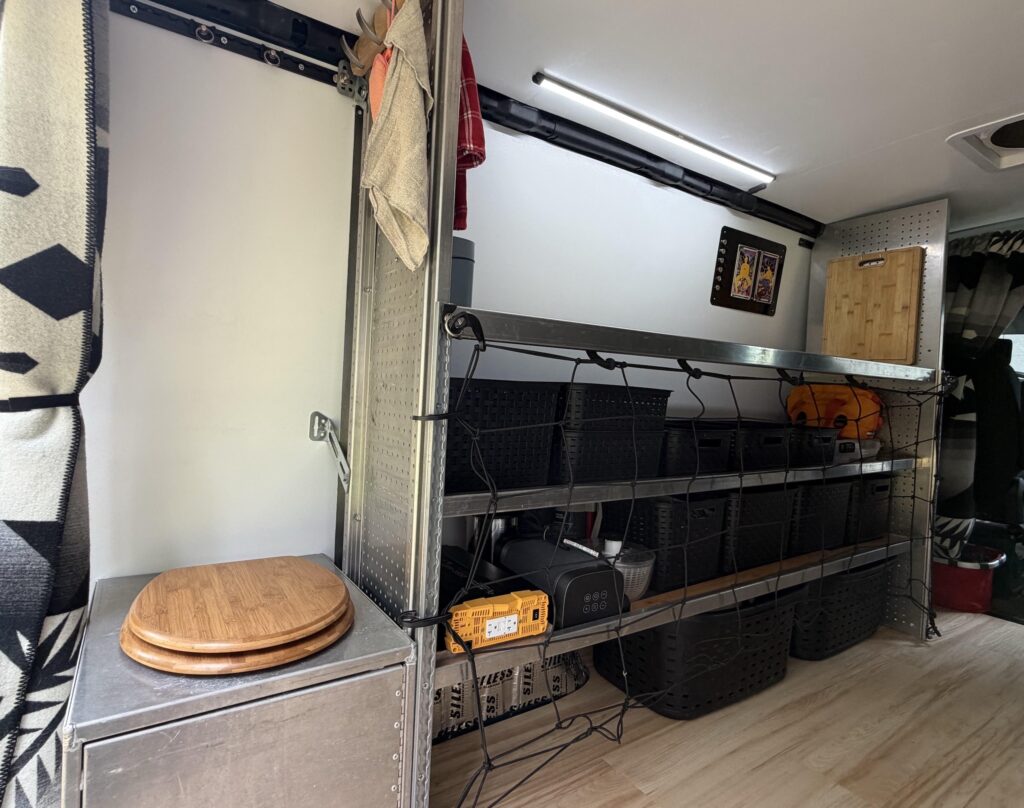
I sleep on a futon that can either be spread on the floor at the start of a trip, when the floor is clean, or spread on the panel that folds down from the shelving on the passenger side of the van. During the day the futon is hung on a rack to air out, and to free up space in the van.
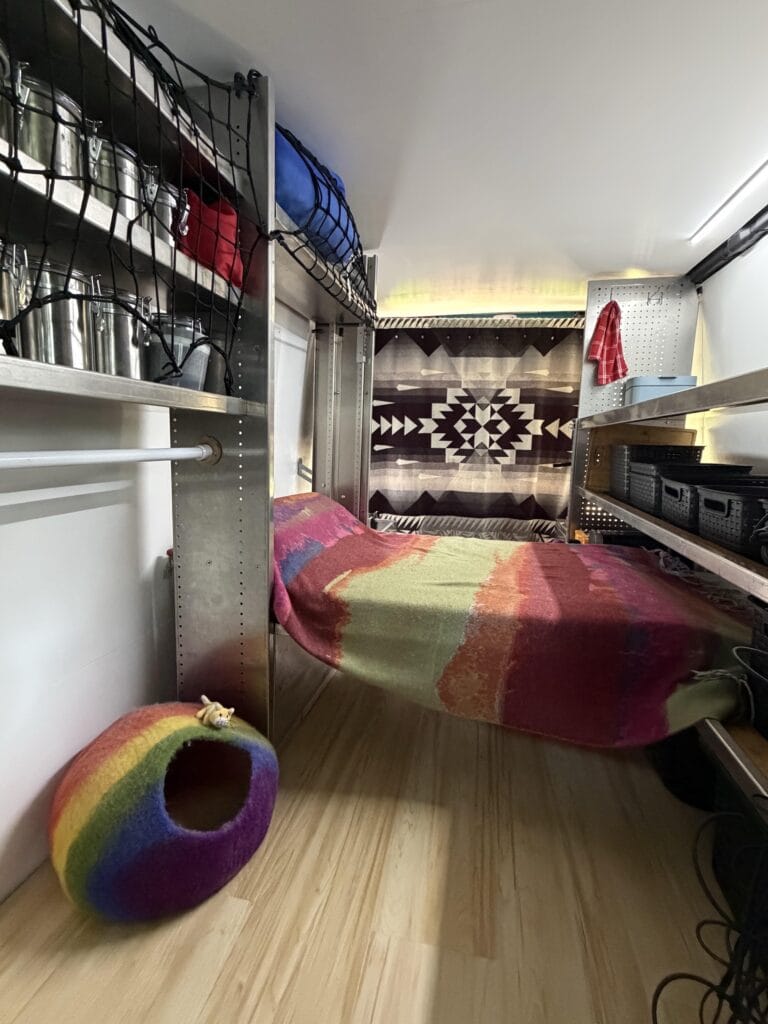
The fold-down panel is also a table. I am comfortable sitting on a cushion, and the raised edges of the shelves function as grab bars on days when my knees complain.
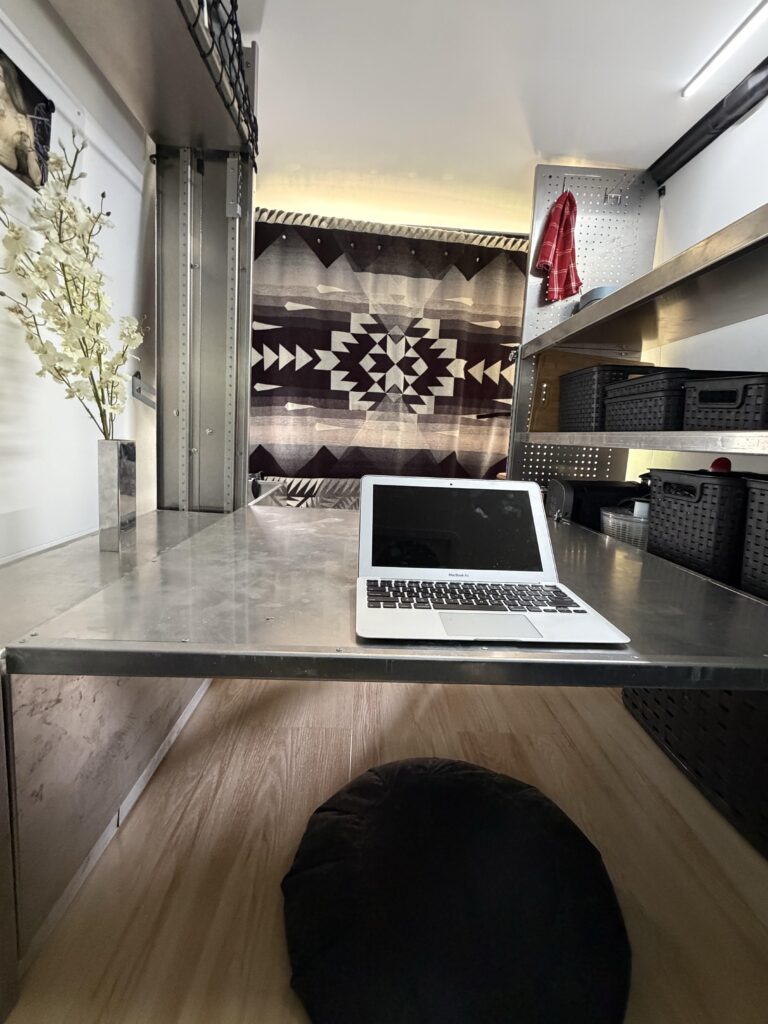
My house is still not completely finished, but looking ahead to taking road trips, I recently had insulation installed. When I purchased the van I had been living in Southern California for almost 40 years, most of them in drought conditions. When the outfitter suggested insulation, I said I wouldn’t need it because I didn’t plan to go winter camping. That was a mistake. I forgot about condensation. And, in the Pacific Northwest it is chilly a good part of the year, not just in winter. So when a new company, Camp N Car, set up shop in Port Townsend last year I made an appointment.
The van has Thinsulate insulation, and the panels are made of Okoume marine grade plywood, painted with Benjamin Moore’s Eco Spec paint. The delay in insulating my van worked to my benefit, as the plywood and paint are superior to the products that were available when I bought my van eleven years ago.
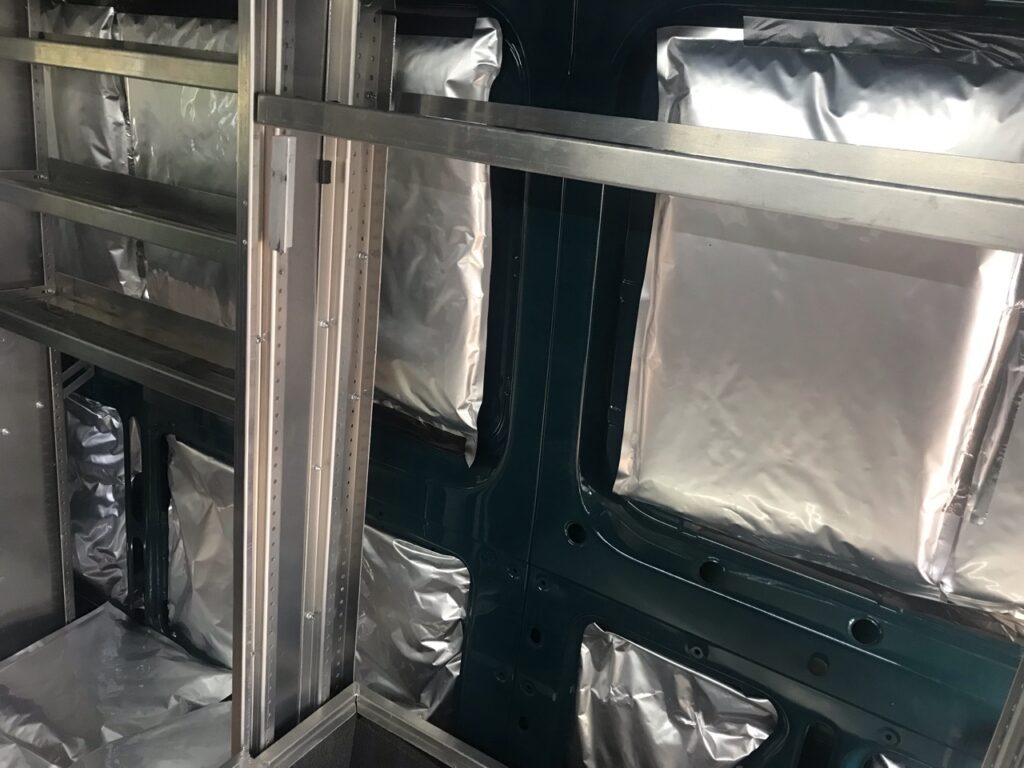
Five years ago, before I discovered there was a plywood I could tolerate, I installed DIY insulation. Inspired by another chemically sensitive person who used this method to insulate a small shelter, I put Knauf Ecobatts in large Mylar bags, which I tucked between the van’s ribs and secured with very strong magnets and duct tape. I put a layer of Reflectix over everything. That worked well enough, but the ceiling sagged, making it impossible to stand upright, and it looked a little crazy. I was thinking of replacing the Reflectix with a fabric of some sort, or possibly with Mylar emergency blankets, when I found Camp N Car. I was happy to rip out my DIY insulation, and I was relieved to find no mold.
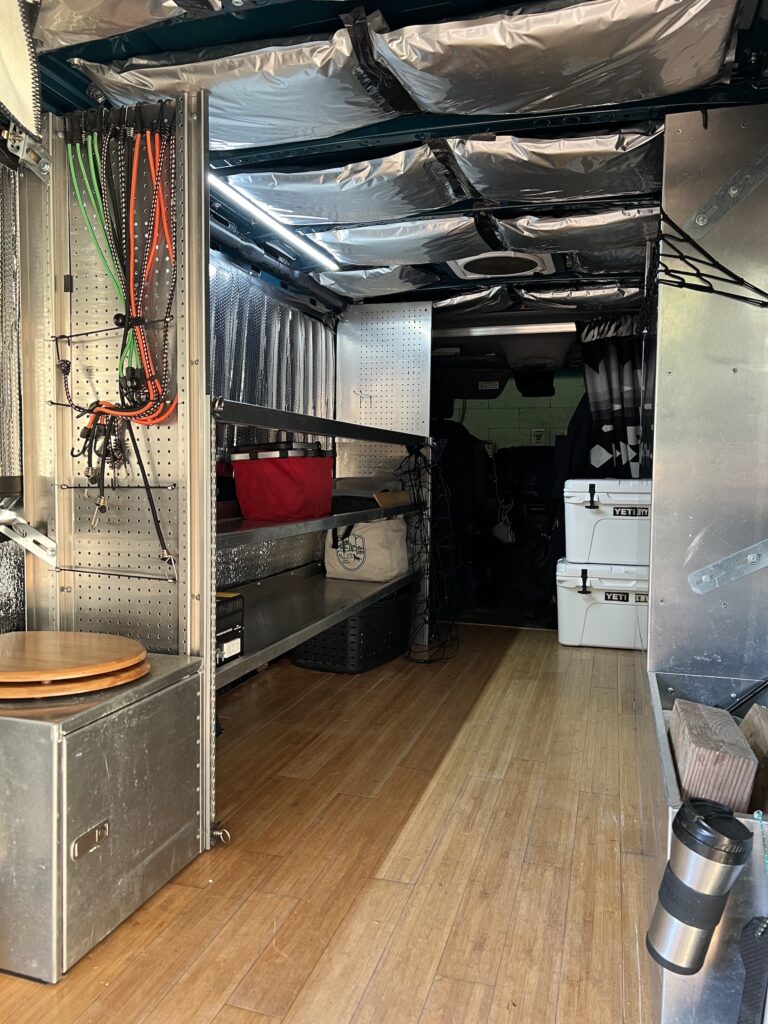
I am happy with my re-worked van. It has a clean, cheerful, homey feel, which is important when I am away from home.
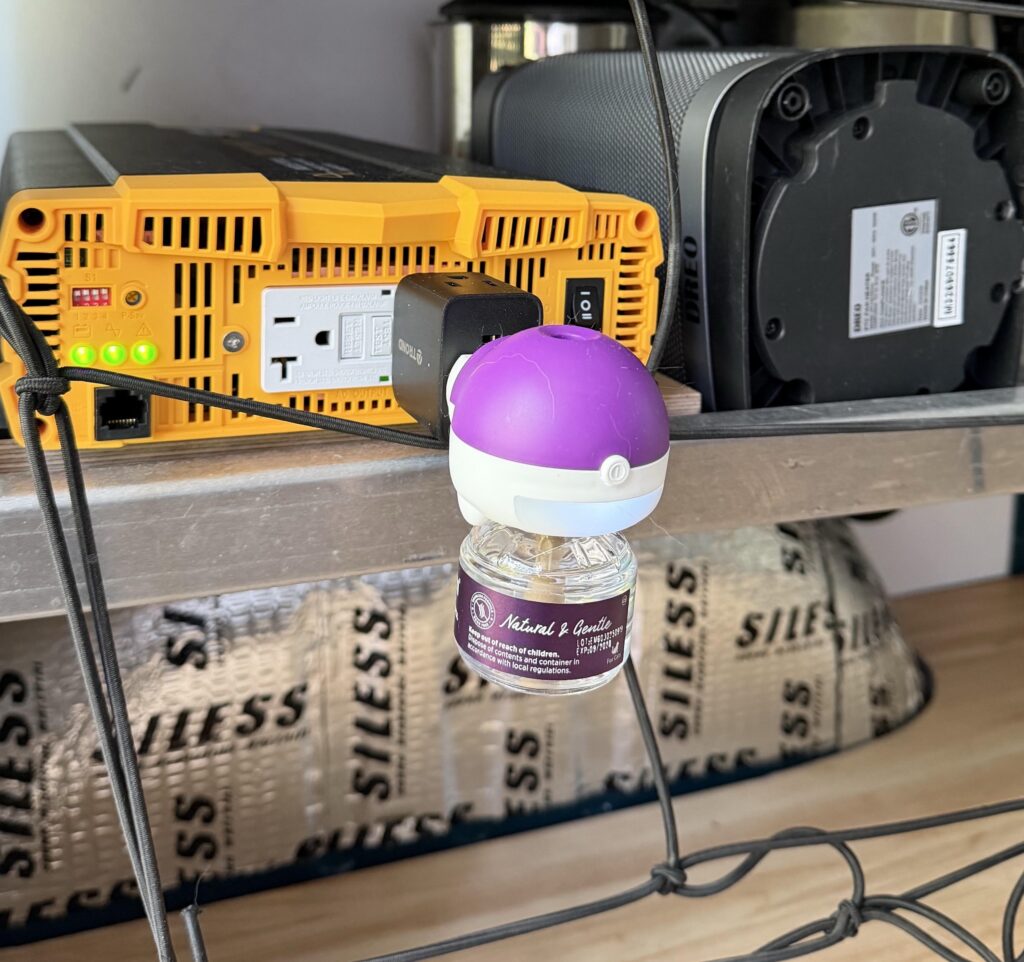
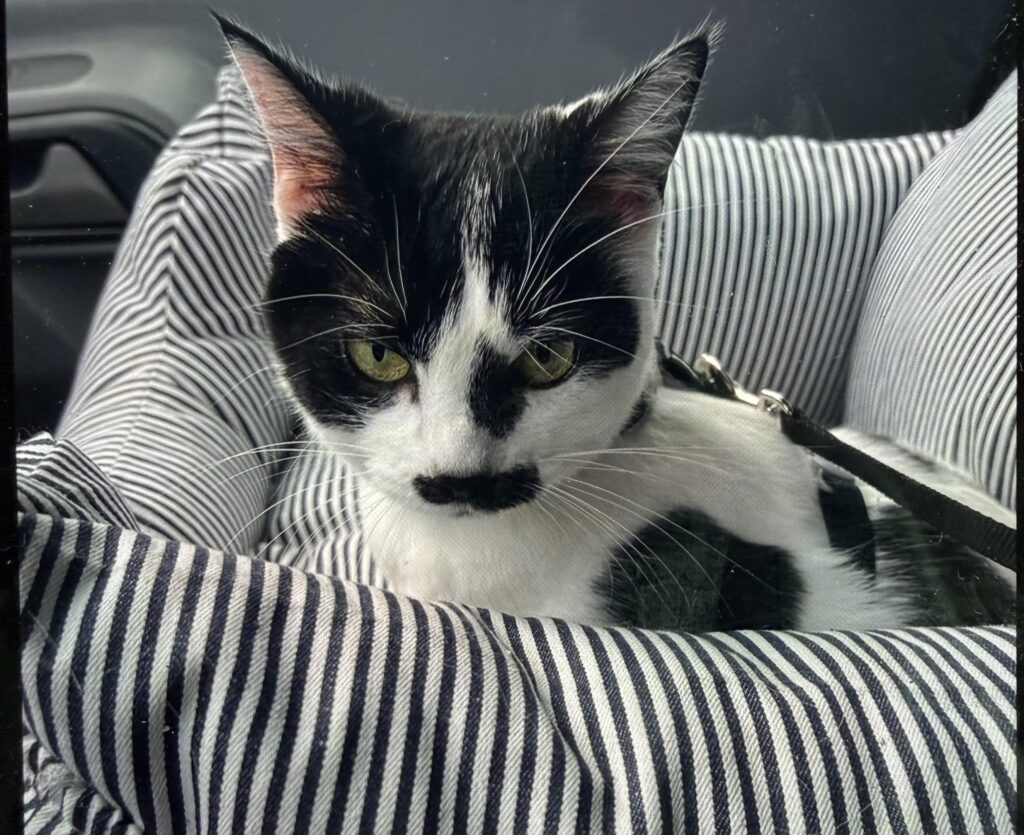
On the left is a Topsum cat pheromone diffuser (unscented), which I am hoping will persuade Quinn, my current rescue cat, that traveling in the van is safe and fun. I can’t go anywhere until Quinn is comfortable in the van. As you can see, she currently is not.